
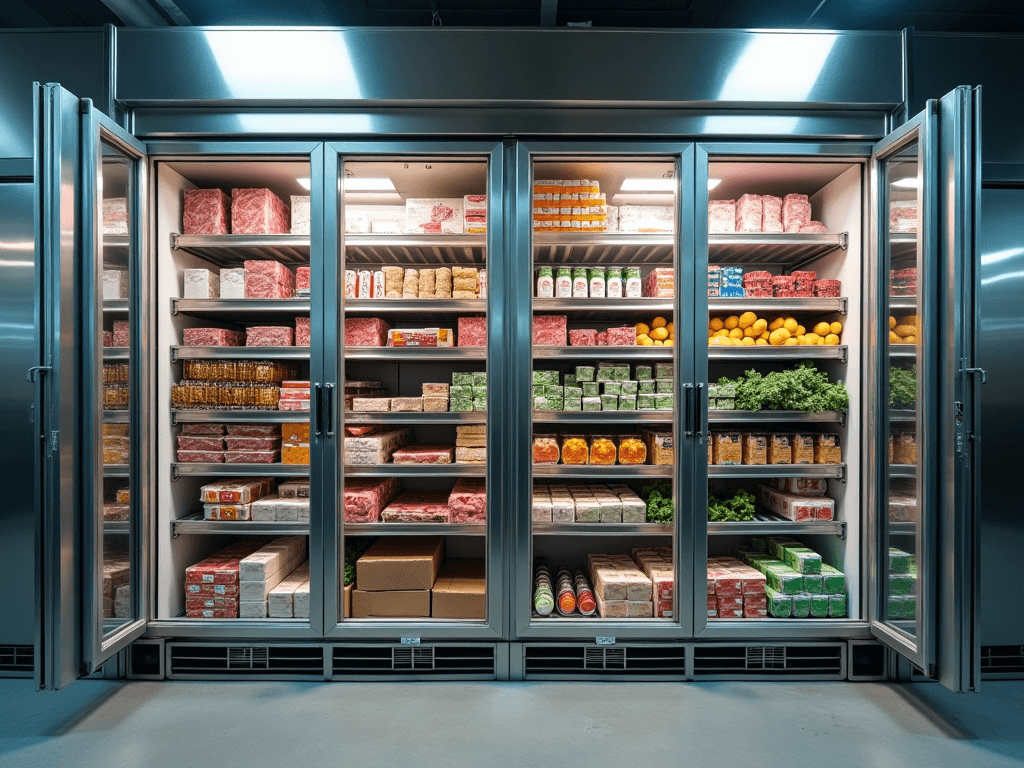
The High Stakes of Temperature Management in Indian Retail
India's organized retail sector has grown exponentially, with supermarket chains expanding across Bangalore, Hyderabad, Delhi, Mumbai, Chennai, and tier-2 cities. The cold chain and retail refrigeration market in India is projected to reach $15 billion by 2027, driven by changing consumer preferences for fresh and frozen foods. However, this growth comes with significant challenges in temperature management.
According to industry estimates, Indian retailers lose approximately 4-6% of perishable inventory to spoilage, translating to thousands of crores in annual losses across the sector. For a typical supermarket doing Rs 50 lakh monthly in fresh and frozen food sales, even a 1% reduction in spoilage saves Rs 6 lakh annually. IoT-based temperature monitoring has become the technology of choice for retailers serious about protecting their margins and meeting regulatory requirements.
Temperature Requirements Across Retail Refrigeration
Modern supermarkets require temperature management across diverse product categories:
Section | Required Temperature | Critical Products |
|---|---|---|
Dairy Chiller | 2°C to 4°C | Milk, curd, cheese, butter |
Fresh Meat Cabinet | -1°C to 4°C | Chicken, mutton, fish |
Produce Section | 4°C to 8°C | Vegetables, fruits, salads |
Frozen Foods | -18°C or below | Ice cream, frozen meals, seafood |
Bakery Chiller | 4°C to 8°C | Cakes, pastries, dough |
Beverage Cooler | 2°C to 8°C | Juices, soft drinks, water |
Deli Counter | Below 5°C | Cold cuts, prepared salads |
Cold Storage Facility Requirements
Cold storage facilities supplying supermarkets face even more demanding requirements:
Bulk storage chambers: Precise temperature control for long-term storage
Ripening rooms: Controlled temperature and humidity for fruits
Blast freezers: Rapid freezing for quality preservation
Pre-cooling areas: Temperature reduction before main storage
Dispatch areas: Temperature maintenance during loading
Challenges Facing Indian Retailers
Supermarkets and cold storage operators across India face unique challenges:
Store traffic patterns: Customer door openings affect display case temperatures
Power reliability: Outages during peak summer can devastate inventory
Equipment aging: Older refrigeration units may not maintain consistent temperatures
Staff compliance: Busy store operations may neglect temperature checks
Multiple locations: Chain operations need centralized visibility
Regulatory pressure: FSSAI enforcement increasing in retail sector
IoT Solutions for Supermarket Temperature Monitoring
Modern retailers require solutions that integrate with existing refrigeration infrastructure while providing centralized visibility. The IBI-CSC50T Wi-Fi Dixell Interfacing Gateway is specifically designed for retail refrigeration environments:
Key capabilities for supermarket applications:
Connects to Dixell and compatible controllers via RS-485 MODBUS
Monitor up to 5 controllers and 20 parameters per gateway
Wi-Fi 802.11 b/g/n connectivity for store network integration
Internal storage for 30 days during network failures
RGB LED status indicator for quick health checks
21 CFR Part 11 compliant reporting for audits
For standalone refrigerators without smart controllers, the IBI-WT120 Wi-Fi Temperature Data Logger provides independent monitoring:
Feature | Specification |
|---|---|
Temperature Range | -50°C to +120°C |
Accuracy | Plus or minus 0.5°C |
Connectivity | Wi-Fi 802.11 b/g/n 2.4 GHz |
Battery Backup | 20 hours during power failure |
Data Storage | 90 days at 15-minute intervals |
Display | 1.3 inch OLED for local verification |
Enclosure | IP64 rated for retail environments |
Multi-Store Chain Monitoring
Retail chains operating across Bangalore, Hyderabad, Delhi, Mumbai, Chennai, and other cities require enterprise-level monitoring capabilities:
Centralized dashboard: View all stores and all equipment from a single interface
Comparative analytics: Identify underperforming equipment across locations
Role-based access: Store managers see their location, regional managers see their territory
Consolidated reporting: Chain-wide compliance reports for FSSAI
Standardized alerts: Consistent thresholds and escalation across all locations
The Ideabytes platform supports unlimited locations with hierarchical organization, enabling retailers to scale monitoring as they expand their store network.
Cold Storage Facility Monitoring
Cold storage facilities require more intensive monitoring than retail stores. The IBI-MTR8 4G M2M 8-Channel PT100 Temperature Data Logger supports monitoring across large facilities:
8 simultaneous PT100 RTD measurement points
Temperature Range: -200°C to +550°C per channel
Accuracy: 0.5°C (0.05% of full scale)
4G LTE CAT1 connectivity with in-built M2M SIM
40,000 record storage for offline operation
2.4 inch OLED display for local readings
Typical deployment for a cold storage facility:
Channel 1-2: Main chamber monitoring at different heights
Channel 3-4: Ante-room and airlock temperatures
Channel 5-6: Pre-cooling area monitoring
Channel 7-8: Loading dock and dispatch area
For facilities requiring humidity monitoring alongside temperature, the IBI-MTH120 4G M2M Temperature and Humidity Data Logger provides both parameters essential for produce storage:
Temperature Range: -40°C to +120°C
Humidity Range: 0 to 100% RH (Condensing)
4G connectivity for facilities without reliable Wi-Fi
Ideal for ripening rooms and humidity-sensitive storage
Integration with Retail Operations
Temperature monitoring delivers maximum value when integrated with retail operations:
Inventory management: Link temperature excursions to affected inventory for disposal tracking
Vendor management: Document receiving temperatures for supplier accountability
Energy management: Correlate temperature data with energy consumption for optimization
Maintenance scheduling: Trigger preventive maintenance based on equipment performance trends
Loss prevention: Identify patterns that indicate equipment issues or procedural lapses
Alert Management for Retail Operations
Effective retail temperature monitoring requires intelligent alert management:
During business hours:
Alerts to store manager and department heads
Warning threshold 2°C before critical limit
15-minute acknowledgment requirement
Automatic escalation to regional manager if no response
After hours:
Alerts to security staff and duty manager
Critical alerts only to reduce fatigue
Clear escalation to on-call technician for equipment issues
Documentation of all overnight excursions
FSSAI Compliance for Retail
FSSAI inspections in retail environments focus on:
Display case temperatures: All chilled displays within prescribed limits
Temperature records: Documented history of temperature maintenance
Product dating: Correlation of storage conditions with shelf life
Staff training: Knowledge of temperature requirements and procedures
Corrective actions: Documentation of responses to temperature issues
The Ideabytes platform provides all documentation required for FSSAI compliance, including automated daily reports, excursion logs with corrective actions, and audit trails for all system activities.
Return on Investment for Retailers
Temperature monitoring investment delivers measurable returns for supermarkets and cold storage operators:
Direct savings:
Spoilage reduction of 1-2% saves lakhs annually in wasted inventory
Early detection of equipment issues prevents costly emergency repairs
Energy optimization through proper temperature management reduces electricity costs by 5-10%
Indirect benefits:
Customer trust through consistent product quality
Regulatory compliance avoiding FSSAI penalties
Insurance support for documented temperature control
Staff efficiency by eliminating manual temperature logging
Example ROI calculation for a typical supermarket:
Monthly perishable inventory: Rs 50 lakh
Current spoilage rate: 5%
Monthly spoilage cost: Rs 2.5 lakh
Monitoring system cost: Rs 1.5 lakh (one-time) + Rs 1,000/month
Spoilage reduction with monitoring: 40%
Monthly savings: Rs 1 lakh
Payback period: Less than 2 months
Implementation Roadmap for Retailers
Phase 1: Critical Equipment (Week 1-2)
Install monitoring on walk-in coolers and freezers
Configure alerts for store manager and duty staff
Train staff on alert response procedures
Phase 2: Display Cases (Week 3-4)
Deploy gateway solutions for display case controllers
Set up department-specific alert routing
Integrate with store operations schedule
Phase 3: Optimization (Month 2+)
Analyze temperature trends for equipment issues
Optimize alert thresholds based on operational experience
Implement energy management correlations
Expand to additional locations
Conclusion
For supermarket chains and cold storage operators across Bangalore, Hyderabad, Delhi, Mumbai, Chennai, and other Indian cities, temperature monitoring has evolved from a nice-to-have to a business necessity. IoT-based solutions like the IBI-CSC50T for display case integration and IBI-MTR8 for cold storage facilities provide the comprehensive coverage, centralized visibility, and compliance documentation that modern retail operations demand. With spoilage prevention delivering rapid ROI and FSSAI enforcement intensifying, retailers who invest in proper temperature monitoring protect both their profit margins and their reputation for quality and safety.