
IQ/OQ/PQ validation
IQ OQ PQ for Data Loggers and Temperature Monitoring Systems: Validation Guide
IQ OQ PQ is the full form of Installation Qualification, Operational Qualification and Performance Qualification: the three documented stages that prove a system is installed correctly, works as specified and keeps performing in real use. For a temperature monitoring system they decide whether the readings, alarms and reports from your data loggers can be relied on in a GMP, GDP or 21 CFR Part 11 inspection. This page is for QA, validation and purchase teams in Indian pharma, hospitals and cold chain companies who are buying or qualifying data loggers. Ideabytes IoT supplies the loggers, probes, calibration certificates on request and 21 CFR Part 11 compliant reports; the qualification protocols are executed by your validation team or a validation partner.
- GeM registered
- 21 CFR Part 11 reports
- Made in India
| Stage | What is verified | Evidence to ask for or produce |
|---|---|---|
| DQ / URS (before purchase) | The user requirement specification states the range, accuracy, interval, alert channels, report format and Part 11 controls the system must meet, and the chosen model is shown to satisfy each line. | Approved URS; supplier datasheet mapped line by line to the URS; software feature list and plan description from the supplier. |
| IQ (Installation Qualification) | The right devices arrived and were installed where the protocol says: model and serial numbers match the purchase order, firmware is recorded, probes sit at the positions the mapping study identified, power, network and battery backup work, and user accounts exist. | Delivery note and serial list, datasheets and manuals, calibration certificate per logger or probe matched by serial number, installation drawing, network and power checks signed off. |
| OQ (Operational Qualification) | Each function works within specification under test conditions: readings agree with a reference, high and low alarms fire at the set limits and after the set delay, SMS and app alerts arrive, power and network loss alarms work, the audit trail records changes, and reports generate correctly. | Executed test scripts with expected and actual results, screenshots of alarms and reports, audit-trail extracts, deviations and their closure. |
| PQ (Performance Qualification) | The system performs reliably in routine use over a defined period with real stock, real door traffic and real staff: no missed readings, alarms handled per SOP, scheduled reports delivered, data retained through any outage. | Continuous data for the PQ period, alarm log and acknowledgement times, scheduled reports as received, review and approval by QA. |
| Calibration | Every sensor has a current calibration against a traceable reference at points bracketing the storage range, with a recalibration interval defined. | NABL / ISO 17025 traceable calibration certificate per logger or probe; calibration schedule in the SOP. |
| 21 CFR Part 11 controls | Individual user logins, access control, a secure time-stamped audit trail, tamper-evident reports and record retention are in place and tested during OQ. | Part 11 statement from the supplier, user list with roles, audit-trail test evidence, report sample. |
| Periodic review and requalification | The system is reviewed at a set interval and requalified after changes to hardware, software, limits, probe positions or the room itself. | Review record, change-control entries, repeat OQ scripts for the affected functions. |
IQ OQ PQ full form and meaning
IQ stands for Installation Qualification: documented proof that the system was delivered and installed according to the approved design and the manufacturer specification. OQ is Operational Qualification: documented proof that every function operates within its specified limits across the expected operating range, usually by challenging it with tests. PQ is Performance Qualification: documented proof that the installed system performs reliably in the actual production environment, with real product, real people and real conditions, over an extended period.
The three stages follow a design qualification (DQ) or user requirement specification, and together they make up the validation of the system. Guidance such as GAMP 5 is commonly used to scale the effort to the risk: a single pharmacy fridge logger needs far less paperwork than a plant-wide monitoring system with hundreds of channels.
IQ OQ PQ in pharma: why a data logger must be validated
GMP and GDP guidance (EU GMP Annex 11 and Annex 15, WHO GDP, Revised Schedule M in India) expects computerised systems that create or hold GMP records to be validated, and 21 CFR Part 11 expects the same for any electronic record a US-FDA inspector may review. A temperature monitoring system is exactly such a system: its readings decide whether a batch, a vaccine consignment or a stability study is accepted or rejected.
An unvalidated system, however good the hardware, cannot be used as compliance evidence. Validation provides the documented proof that the data logger reads accurately where it is installed, that the alarm will actually reach someone, and that the report an inspector sees is complete and unaltered.
IQ: Installation Qualification for data loggers
IQ starts with the delivery. Check that model numbers and serial numbers match the purchase order and the calibration certificates, record the firmware version, and file the datasheets and user manual. Then verify the installation: each logger or probe is at the position the temperature mapping study identified, fixed so it cannot be moved by stock handling, powered, and connected to the Wi-Fi, LAN or 4G network. Confirm the battery backup works by removing mains power and watching the logger keep logging.
Finally, confirm the software side of the installation: the device appears on the cloud account, channels are named after the rooms and equipment they monitor, limits and alarm contacts are entered, and each user has an individual login with the correct role.
- Serial numbers, firmware and calibration certificates matched and filed
- Probe positions per the mapping report, with a drawing
- Power, network and battery backup verified
- Users, roles, channel names and limits configured and recorded
OQ: Operational Qualification tests that matter for monitoring
OQ challenges each function. Compare logger readings against a calibrated reference at the storage set point. Lower and raise the limit to force a high and a low alarm, and record the time the reading crossed the limit, the time the alarm was raised after the configured delay, and the time the SMS or app notification arrived. Pull the power and the network cable and confirm the loss-of-power and loss-of-network alarms. Change a limit and a user, then confirm the audit trail shows who did what and when.
Generate an on-demand PDF report and a scheduled report, and check that they show the period, the readings, the alarms and the MKT value correctly. Ideabytes loggers store 90 days of readings on board (40,000 records on the 8-channel units), so an OQ test should also prove that readings logged during an outage appear on the platform once the connection returns.
PQ: Performance Qualification in routine use
PQ runs the system as it will actually be used, with real stock, real door openings, real shift changes and the SOP in force, for a period defined in the protocol and commonly measured in weeks. The PQ report compares the continuous record against the limits and the mapping data, reviews every alarm and how quickly it was acknowledged, confirms scheduled reports were received by the right people, and records any deviation and its CAPA. QA approves the report, and only then are the records used as compliance evidence.
Documents to ask a data logger supplier for
Much of the IQ and OQ evidence comes from the supplier, so ask for it before the order is placed rather than after the auditor arrives. Ideabytes IoT can supply the items below on request; ask Sales which validation support documents are available for your models and confirm the scope in writing.
- Datasheet and user manual for each model, stating range, accuracy, interval, memory and battery backup
- NABL / ISO 17025 traceable calibration certificate per logger or probe, matched by serial number
- Serial-number list against the delivery note
- Description of the software plan: alert channels, scheduled reports, user roles and audit trail
- A 21 CFR Part 11 statement and sample report showing the audit trail and alarm history
- Any IQ/OQ templates or test scripts the supplier offers for the model, to adapt to your protocol
- Warranty, firmware version and change-notification policy
How 21 CFR Part 11, GDP and mapping tie in
21 CFR Part 11 is about the trustworthiness of electronic records and signatures: unique logins, secure audit trails, time-stamped data and validation. GDP and GMP are about the storage and transport conditions themselves. IQ OQ PQ is the bridge: it proves that the Part 11 controls work on your installed system and that the conditions GDP cares about are being measured in the right place by a calibrated sensor.
The temperature mapping study comes first, because it tells you where the probes must go; the calibration certificate proves each probe reads correctly; IQ OQ PQ proves the installed system works end to end; and the 21 CFR Part 11 compliant reports, audit trail and alarm logs from the platform then provide the day-to-day evidence. Our temperature mapping guide, calibration certificate guide and 21 CFR Part 11 checklist cover each piece.
Calibration vs validation
Calibration verifies that a single instrument reads accurately by comparing it against a known standard. Validation verifies that the entire system, sensors, loggers, network, cloud platform, alerts, reports and the people using them, works together correctly in your specific environment. Both are required: a validated system with uncalibrated probes gives the right alarm at the wrong temperature, and a calibrated probe on an unvalidated system cannot prove the alarm reached anyone.
Loggers with IQ/OQ/PQ validation support
Every listed model produces tamper-evident, audit-ready reports from the Ideabytes cloud.
Showing 8 products

IBI-WTH120 | Wi-Fi Temperature & Humidity Data Logger
Measuring Range from -40°C to +120°C | Humidity from 0% RH to 100% RH (Condensing)
- •Wi-Fi 802.11 b/g/n 2.4 GHz Connectivity
- •± 0.5°C (-10°C to +50°C) Accuracy
 Popular
IBI-MTH120 | 4G M2M Temperature & Humidity Data Logger
Measuring Range from -40°C to +120°C
- •4G LTE CAT1 Technology with In-built M2M SIM Connectivity
- •± 0.5°C (-10°C to +50°C) Accuracy
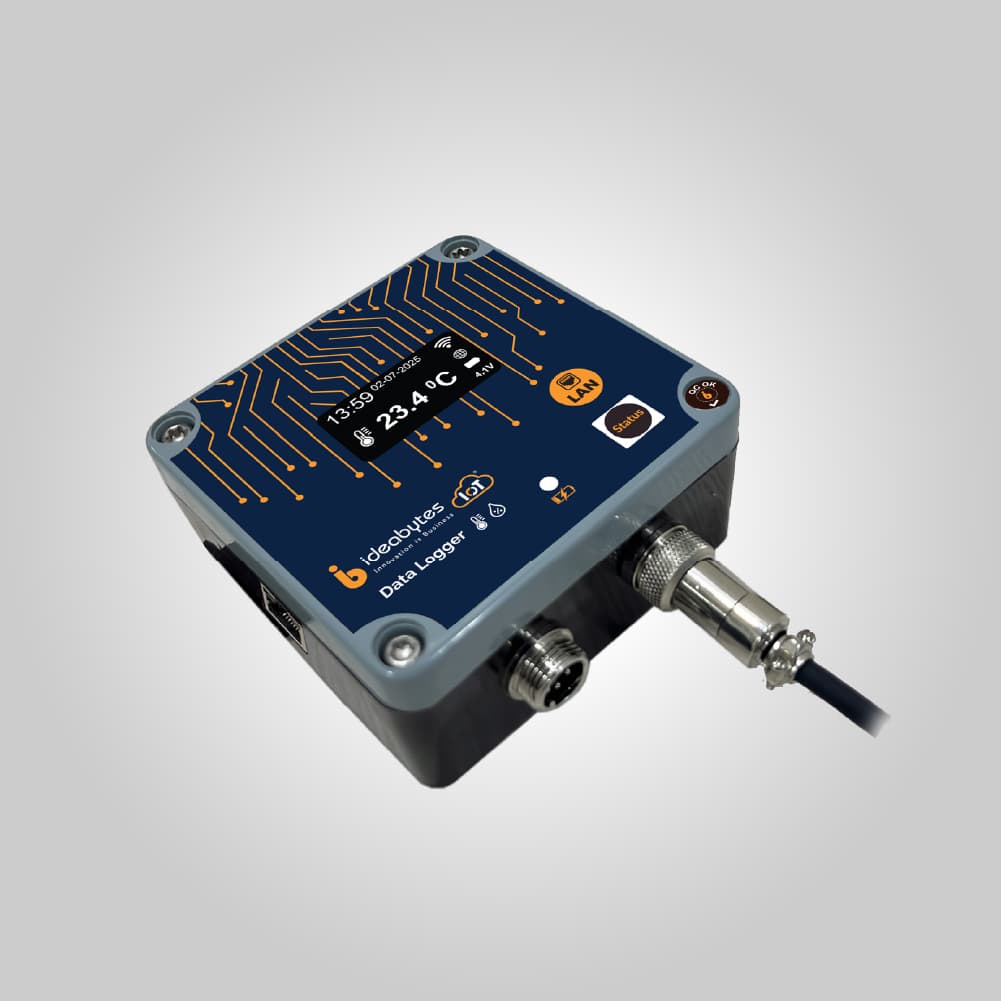
IBI-ETH120 | Ethernet Temperature & Humidity Data Logger
Measuring Range from -40°C to +120°C | Humidity from 0% RH to 100% RH (Condensing)
- •LAN Ethernet RJ45 10/100 Connectivity
- •± 0.5°C (-10°C to +50°C) Accuracy

IBI-WTR8 | Wi-Fi 8 Channel PT100 Temperature Data Logger (8 Temperature)
Measuring Range PT100: -200°C to 550°C | PT1000: -200°C to 550°C (Optional)
- •Wi-Fi 802.11 b/g/n 2.4 GHz Connectivity
- •0.5°C (0.05% of Full Scale) Accuracy
- •2.4" 128X64 OLED monochrome Graphical Display

IBI-MTR8 | 4G M2M 8 Channel PT100 Temperature Data Logger (8 Temperature)
Measuring Range PT100 : -200°C to 550°C | PT1000 : -200°C to 550°C (Optional)
- •4G LTE CAT1 Technology with In-built M2M SIM Connectivity
- •0.5°C (0.05% of Full Scale) Accuracy
- •2.4" 128X64 OLED monochrome Graphical Display

IBI-WT350 | Wi-Fi Temperature Data Logger
Measuring Range from -200°C to +350°C
- •Wi-Fi 802.11 b/g/n 2.4 GHz Connectivity
- •± 0.5°C (-10°C to +50°C) Accuracy

IBI-MT350 | 4G M2M Temperature Data Logger
Measuring Range from -200°C to +350°C
- •4G LTE Cat1/2G fallback Connectivity
- •± 0.5°C (-10°C to +50°C) Accuracy
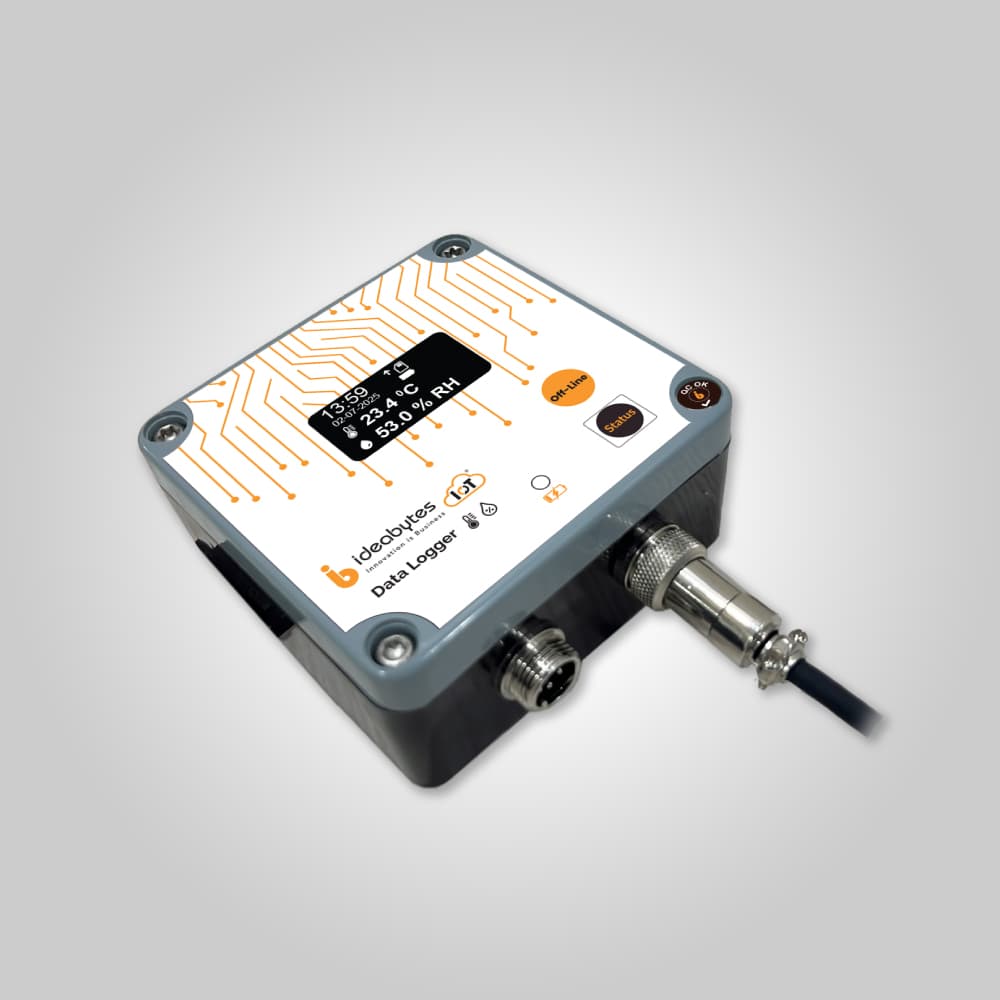
IBI-OTH120 | Offline Temperature & Humidity Data Logger
Measuring Range from -40°C to +120°C
- •±0.5°C accuracy
- •Plug & Play, Wall Mountable Device
- •Data Download Options (Wi-Fi / USB)
Applications
Other compliance and buyer guides
Frequently asked questions
What is the full form of IQ OQ PQ?
IQ is Installation Qualification, OQ is Operational Qualification and PQ is Performance Qualification. Together with a design qualification or user requirement specification they make up the validation of a system, proving that it was installed correctly, operates within specification and performs reliably in routine use.
Is IQ OQ PQ mandatory for a temperature data logger?
Where the logger creates GMP or GDP records, GMP guidance such as EU Annex 11 and Annex 15, WHO GDP, Revised Schedule M and 21 CFR Part 11 commonly expect the monitoring system to be validated, and inspectors ask for the evidence. The depth is scaled to risk: a single fridge logger needs a short protocol, a plant-wide system a full one. Confirm the scope with your QA team.
Who performs the IQ OQ PQ for a data logger system?
The user or a validation partner executes the protocols; the supplier provides the inputs. Ideabytes IoT supplies the loggers, probes, datasheets, calibration certificates on request and 21 CFR Part 11 compliant reports, and can advise on test steps for its devices. Writing, executing and approving the IQ, OQ and PQ protocols remains the responsibility of your validation team or partner.
Does Ideabytes supply IQ OQ PQ documents with its data loggers?
Ask Sales which validation support documents are available for your models: datasheets, calibration certificates, a software feature description, a 21 CFR Part 11 statement, sample reports and any IQ/OQ templates or test scripts for the device. The scope and format should be confirmed in writing before the order so your protocol can reference them.
How long does data logger validation take?
IQ and OQ for a small system are commonly completed in days once the documents are in hand; PQ runs for a period defined in the protocol, often several weeks, so that real operating cycles, door traffic and shift changes are captured. The total depends on the number of channels, the depth of testing your risk assessment requires and how quickly deviations are closed.
How often should a monitoring system be requalified?
Commonly at a defined periodic review interval set in your validation master plan, and whenever a change could affect the records: new firmware or software, a moved probe, a changed limit, a replaced logger, or a modified room, HVAC or layout. Change control decides whether a full or partial OQ is repeated. Recalibration follows its own interval on the calibration certificate.
What does IQ OQ PQ for data loggers cost?
The logger cost depends on the models, quantities, connectivity and calibration certificates required; the qualification cost depends on the number of channels, the depth of your protocol and whether your own team or a validation partner executes it. Send us your URS or equipment list and we will quote the loggers, calibration and the documentation available for them.
Related reading
Compliance guides
From the blog
Need audit-ready monitoring?
Tell us what you store, how many points you need to monitor and which audits you face. Our team in Hyderabad will recommend a setup and send a quotation.