Temperature monitoring
Operation Theatre & ICU Temperature and Humidity Monitoring
Operation theatre temperature is usually held between about 18 °C and 24 °C, with relative humidity between 40 % and 60 %, and ICUs are kept in a similar band. Those limits protect sterile fields, limit microbial growth and keep patients, surgeons and electronic equipment within safe conditions. OT and ICU temperature and humidity monitoring means recording both values continuously, room by room, with an alarm when either drifts and a report an NABH assessor can read. Ideabytes IoT supplies wall-mounted Wi-Fi, 4G and Ethernet temperature-humidity loggers with built-in sensors, live alerts and 21 CFR Part 11 compliant PDF reports for hospitals across India.
- GeM registered
- 21 CFR Part 11 reports
- Made in India
What goes wrong without monitoring
- Humidity above the upper limit encourages microbial growth on surfaces and can dampen sterile packs, while very dry air adds static and irritates airways, and few hospitals log RH at all.
- Cold supply air meeting a warm, humid corridor causes condensation on diffusers, walls and equipment, often during the monsoon and usually unnoticed until someone sees water.
- OT and ICU temperature is still written on a paper chart once per shift, which cannot show what happened between readings or prove the entries were not filled in later.
- Nights, Sundays and holidays leave empty theatres unwatched, so an AHU fault is found only when the first list of the day is about to start.
- NABH assessors ask for the temperature and humidity history of a specific OT or ICU and the action taken on each deviation, and paper logs rarely answer that quickly.
- An AHU or chiller trip, a blocked filter or a failed humidifier can push a theatre out of range within an hour, and facilities teams hear about it only from the surgical team.
How the system works
- 1List every OT, ICU, NICU, recovery room, CSSD and sterile store, and write down the temperature and RH band your infection-control SOP sets for each.
- 2Mount one built-in temperature-humidity logger per room, such as the IBI-WTH50 (Wi-Fi), IBI-ETH50 (Ethernet) or IBI-MTH50 (4G), away from supply diffusers, doors and heat-generating equipment.
- 3Use a probe-type IBI-WTH120 or IBI-ETH120 where the reading must be taken inside an AHU, a duct or a pass box rather than in the room itself.
- 4Set temperature and RH limits per room with a short delay, and route alerts to the OT in-charge first, then biomedical or HVAC engineering, then the duty manager.
- 5Review the dashboard daily, add a corrective-action note against every alarm, and send scheduled PDF reports to the quality team before each internal audit or NABH assessment.
Standards and regulators
- NABH
- ASHRAE 170 (guidance)
- MoHFW guidelines
- 21 CFR Part 11
Recommended loggers for ot & icu
Selected from the Ideabytes range for this application. All models report to one cloud dashboard with SMS, email and call alerts.
Showing 8 products

IBI-WTH50 | Wi-Fi Built-In Temperature & Humidity Data Logger
Measuring Range from 0°C to +50°C | Humidity from 0% RH to 100% RH
- •Wi-Fi 802.11 b/g/n 2.4 GHz Connectivity
- •± 0.5°C (-10°C to +50°C) Accuracy
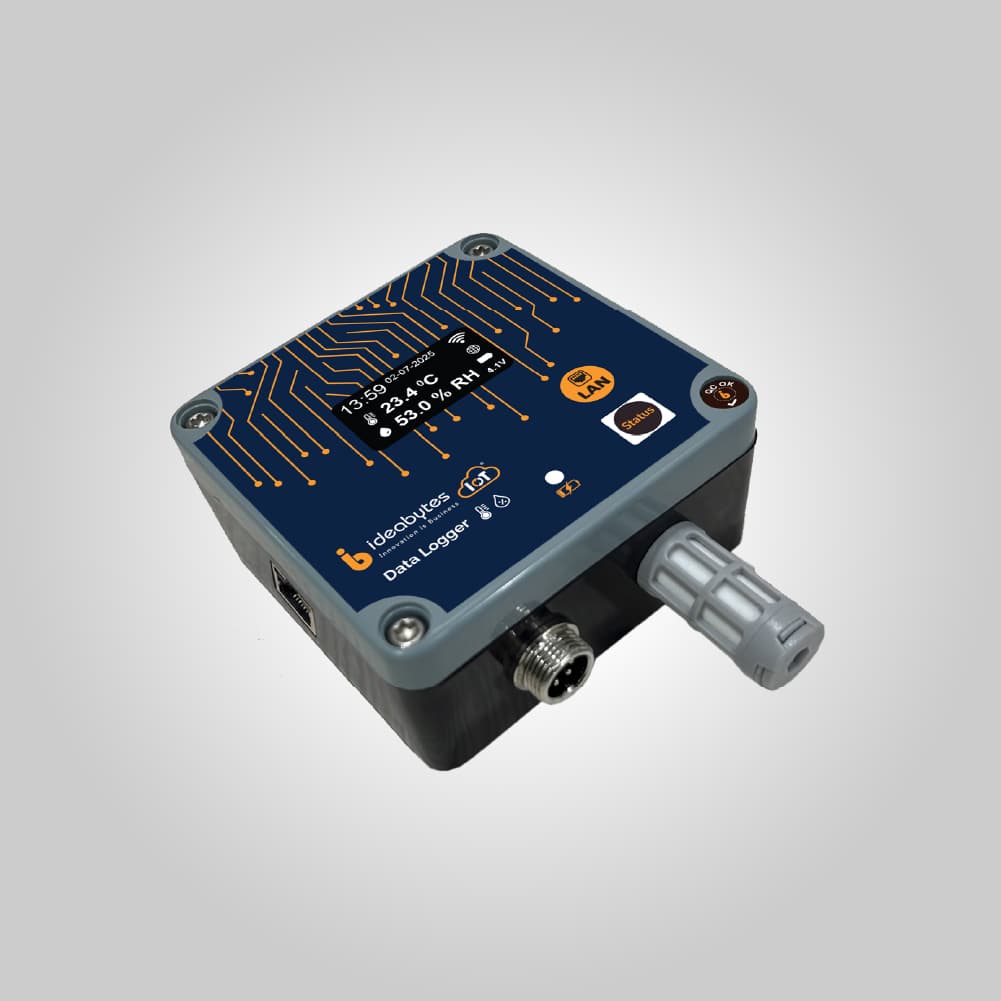
IBI-ETH50 | Ethernet Built-In Temperature & Humidity Data Logger
Measuring Range from 0°C to +50°C | Humidity from 0% RH to 100% RH
- •LAN Ethernet RJ45 10/100 Connectivity
- •± 0.5°C (-10°C to +50°C) Accuracy

IBI-MTH50 | 4G M2M Built-In Temperature & Humidity Data Logger
Measuring Range from 0°C to +50°C | Humidity from 0% RH to 100% RH
- •4G LTE CAT1 Technology with In-built M2M SIM Connectivity
- •± 0.5°C (-10°C to +50°C) Accuracy

IBI-WTH120 | Wi-Fi Temperature & Humidity Data Logger
Measuring Range from -40°C to +120°C | Humidity from 0% RH to 100% RH (Condensing)
- •Wi-Fi 802.11 b/g/n 2.4 GHz Connectivity
- •± 0.5°C (-10°C to +50°C) Accuracy
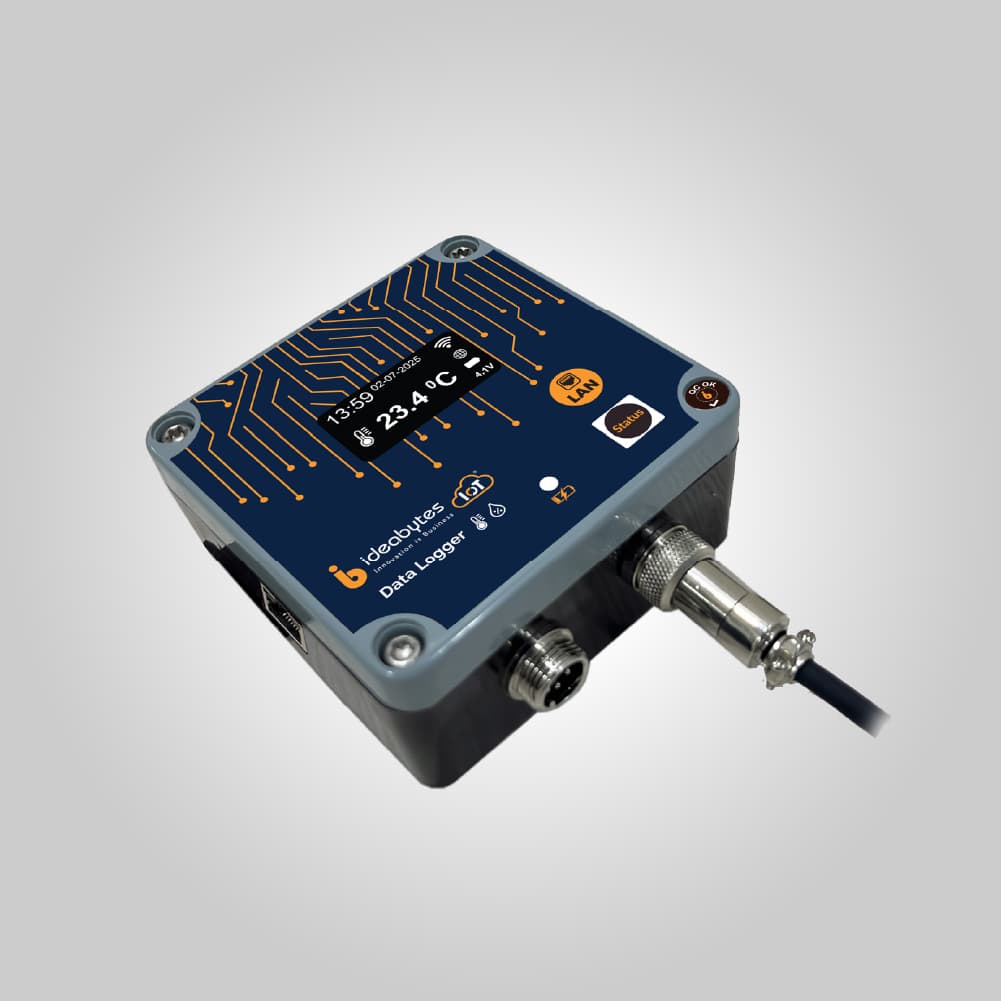
IBI-ETH120 | Ethernet Temperature & Humidity Data Logger
Measuring Range from -40°C to +120°C | Humidity from 0% RH to 100% RH (Condensing)
- •LAN Ethernet RJ45 10/100 Connectivity
- •± 0.5°C (-10°C to +50°C) Accuracy

Wi-Fi Customized Room Parameter Data Logging & Live Alerting System
Wi-Fi Customized Data Logger - Sensor & Accessories need to be procure separately
- •Wi-Fi 802.11 b/g/n 2.4 GHz Connectivity

M2M Customized Room Parameter Data Logging & Live Alerting System
4G M2M Customized Data Logger - Sensor & Accessories need to be procure separately
- •4G LTE CAT1 Technology with In-built M2M SIM
 Popular
IBI-MTH120 | 4G M2M Temperature & Humidity Data Logger
Measuring Range from -40°C to +120°C
- •4G LTE CAT1 Technology with In-built M2M SIM Connectivity
- •± 0.5°C (-10°C to +50°C) Accuracy
Operation theatre temperature and humidity: recommended ranges
There is no single number that every hospital must follow. The figures below are commonly cited guidance drawn from NABH hospital standards, ASHRAE Standard 170 (ventilation of health care facilities) and Ministry of Health and Family Welfare (MoHFW) planning guidance. They are not law, and your own infection-control committee, HVAC designer and surgical teams set the final limits for each room.
- Operation theatre temperature: typically 18–24 °C; many hospital specifications narrow this to 20–24 °C, and some specialities such as cardiac or orthopaedic theatres run cooler on request.
- Operation theatre humidity: typically 40–60 % RH; ASHRAE 170 allows a wider band for operating rooms, with 60 % RH as the upper limit.
- ICU temperature: typically 20–24 °C (commonly quoted as 22 ± 2 °C) with RH of about 40–60 %.
- NICU and paediatric ICU: often kept warmer than adult units, around 22–26 °C, because newborns lose heat quickly.
- Recovery rooms, CSSD sterile stores and procedure rooms: usually 18–24 °C and no more than 60 % RH, per your SOP.
Why ICU and OT temperature is kept low
People often ask why ICU temperature is low or why an operation theatre feels cold. Cooler, drier air slows the growth of bacteria and fungi, keeps gowned surgeons comfortable under bright lights, and offsets the heat from anaesthesia machines, monitors and imaging equipment. Humidity is held below about 60 % because damp air supports microbial growth and can compromise sterile wraps, and above about 40 % in most specifications to reduce static and dry airways.
The patient is protected separately with warming blankets and fluid warmers, which is why the room itself can stay cool. The risk is not the target range but drift: an AHU trip, a stuck humidifier or a chiller fault moves both values within an hour, and nobody in a busy theatre is watching a wall thermometer.
OT temperature and humidity monitoring system: how it works
An OT temperature and humidity monitoring system replaces the wall hygrometer and paper chart with a logger that reads both values continuously and sends them to a cloud dashboard. Ideabytes built-in sensor loggers (IBI-WTH50, IBI-ETH50, IBI-MTH50) measure 0 °C to +50 °C at ±0.5 °C and 0–100 % RH at ±2 % RH, with 0.1 resolution on both. Readings are sent every 15 minutes by default, and the interval is configurable if your SOP asks for more frequent readings.
Each unit has an OLED display so staff can read the current values at the door, an IP64 enclosure, up to 20 hours of battery backup during a power failure, and 90 days of internal storage at 15-minute sampling, so a network outage does not leave a gap in the record.
Placement matters as much as the logger. Mount it at about working height on a wall away from supply diffusers, return grilles, the door and heat sources such as anaesthesia workstations or warming cabinets, so it reads the air around the patient rather than a draught. In large theatres or ICUs with several bays, one logger per zone shows whether the far end of the room holds the same band. Where a reading is needed inside the AHU or a pass box, use a probe model and keep the logger outside the sterile area.
Wi-Fi, Ethernet or 4G for hospital rooms
The three built-in models differ only in how they connect. Ethernet (IBI-ETH50, IBI-ETH120) suits new blocks where a LAN point is already in every OT and the IT team prefers wired devices. Wi-Fi (IBI-WTH50, IBI-WTH120) suits hospitals with good 2.4 GHz coverage and a quick IT approval process.
4G (IBI-MTH50) uses a built-in M2M SIM with 2G fallback, so it needs no hospital network, credentials or firewall changes, which often shortens approval from months to days. For a whole building with many rooms and other parameters, the IBI-WC-X (Wi-Fi) and IBI-MC-X (4G) customised room parameter systems bring several sensors into one project; sensors and accessories for these are specified per site.
NABH OT temperature requirement: what assessors look for
NABH standards expect hospitals to maintain a safe environment in critical areas and to show evidence that it is monitored. In practice assessors typically ask to see the temperature and humidity record for a sample of OTs and ICUs, the last deviation, who was informed and what corrective action was taken. They also check that the measuring instrument is calibrated.
Ideabytes is not an accreditation body, and a logger alone does not make an OT compliant. What it gives your quality team is a continuous, time-stamped record with an audit trail, alarm logs, trend graphs and CAPA notes, exported as 21 CFR Part 11 compliant PDF reports, with NABL-traceable calibration certificates available on request.
Alarms that reach the right people before the next case
Each logger raises live alerts and app push notifications, with SMS as an option, when temperature or humidity crosses its limit, when the power fails or when the device goes offline. Set separate limits for each room so a NICU and an orthopaedic theatre are judged against their own bands, and add a short delay so a door opened for a trolley does not trigger an alarm.
- Separate temperature and RH limits per room, per shift if needed.
- Escalation from OT in-charge to HVAC or biomedical engineering to the duty manager.
- Scheduled daily, weekly or monthly reports plus on-demand PDFs before an audit.
Compliance guides
Frequently asked questions
What temperature should an operation theatre be?
Commonly cited guidance puts operation theatre temperature at about 18–24 °C, with many hospitals specifying 20–24 °C, and relative humidity at about 40–60 %. Some specialities run cooler at the surgeon's request. These are guidance values from NABH, ASHRAE 170 and MoHFW documents rather than a legal limit, so your infection-control committee should set the final range for each theatre.
What is the ideal ICU temperature and humidity?
Adult ICUs are usually kept at about 20–24 °C, often quoted as 22 ± 2 °C, with relative humidity of about 40–60 %. Neonatal ICUs are usually warmer, around 22–26 °C, because newborns lose heat quickly. A temperature-humidity logger in each unit shows whether the room actually holds that band through the night and during AHU maintenance.
Which logger is best for an OT: built-in sensor or probe?
For measuring the room itself, a built-in sensor model such as the IBI-WTH50, IBI-ETH50 or IBI-MTH50 is simplest: 0–50 °C and 0–100 % RH on one wall-mounted unit. Choose a probe model such as the IBI-WTH120 or IBI-ETH120 when the sensor has to sit inside an AHU, duct or pass box while the logger stays outside.
Do these records help with NABH accreditation?
They give NABH assessors the evidence they typically ask for: a continuous, time-stamped temperature and humidity history per room, alarm logs, corrective-action notes and an audit trail, exported as 21 CFR Part 11 compliant PDF reports. NABL-traceable calibration certificates are available on request. Accreditation depends on your whole facility management programme, not on the logger alone.
Can government hospitals buy these loggers through GeM?
Yes. Ideabytes IoT is registered on GeM and is a QCI-approved OEM, so government hospitals and medical colleges can buy through the GeM portal. The loggers are manufactured in India, and Ideabytes is a DOT-approved M2M service provider, so the 4G models work in blocks where hospital Wi-Fi is not available.
How much does an OT and ICU temperature and humidity monitoring system cost?
It depends on the number of rooms, the connectivity you choose (Wi-Fi, Ethernet or 4G), whether you need built-in sensors or probes, and the reporting subscription. A single day-care OT and a 20-theatre hospital need very different setups. Send us your list of rooms and we will return an itemised quote for your site.
Related reading
Applications
From the blog
Plan monitoring for your site
Tell us what you store, how many points you need to monitor and which audits you face. Our team in Hyderabad will recommend a setup and send a quotation.