Temperature monitoring
Deep Freezer & Walk-in Freezer Temperature Monitoring
Deep freezer temperature is normally -18 °C or colder: most commercial chest and upright deep freezers run between -18 °C and -25 °C, walk-in freezers between about -18 °C and -23 °C, and specialist units go much lower, down to -80 °C for ultra-low freezers. Deep freezer temperature monitoring means recording that temperature continuously at the product, with an alarm when the unit warms and a report that proves what the stock experienced. It is for food businesses, supermarkets, ice cream distributors, pharmacies and laboratories. Ideabytes IoT supplies Wi-Fi, 4G, Ethernet, USB and offline freezer data loggers with probes rated from -50 °C, or -200 °C for PT100 models.
- GeM registered
- 21 CFR Part 11 reports
- Made in India
What goes wrong without monitoring
- Door gaskets harden and tear with age, so warm, humid air leaks in, ice builds on the evaporator and the cabinet slowly loses its ability to hold -18 °C.
- Automatic defrost cycles raise air temperature for a while several times a day; without a record, nobody can tell a normal defrost peak from a real failure.
- A failing compressor or a fan motor runs longer and longer before it stops completely, and the only clue is a rising trend that a once-a-day reading never shows.
- Power cuts and delays in generator changeover warm a freezer silently overnight, and by morning the display has recovered while the stock may already have partly thawed.
- Walk-in freezer doors left ajar during loading, or a staff member forgetting to close a chest freezer lid, cause excursions that last hours before anyone notices.
- FSSAI inspectors, GDP auditors and customers ask for temperature records, and handwritten charts are incomplete, easy to back-fill and hard to defend.
How the system works
- 1List every chest freezer, upright deep freezer, walk-in freezer and blast freezer, and note the range each must hold for the product it stores.
- 2Fit one probe-type logger per unit, or a dual-channel logger such as the IBI-WTD120 or IBI-MTD120 where a fridge and a freezer, or two freezers, sit side by side.
- 3Place the probe in the product zone, ideally in a glycol-filled bottle or product simulant, away from the door, the evaporator fan and the defrost heater.
- 4Choose connectivity per site: Wi-Fi or Ethernet where a network exists, 4G with a built-in SIM for remote sites, and offline or USB loggers where no live alerts are needed.
- 5Set limits with a delay long enough to ride through a normal defrost cycle, and route alerts to the store or shift manager first, then maintenance.
- 6Review the dashboard and scheduled PDF reports, record the cause and corrective action for each excursion, and keep calibration certificates on file for inspections.
Standards and regulators
- FSSAI
- HACCP
- WHO GDP
- 21 CFR Part 11
Recommended loggers for deep & walk-in freezers
Selected from the Ideabytes range for this application. All models report to one cloud dashboard with SMS, email and call alerts.
Showing 10 products

IBI-MT120 | 4G M2M Temperature Data Logger
Measuring Range from -50°C to +120°C
- •4G LTE Cat1/2G fallback Connectivity
- •± 0.5°C (-10°C to +50°C) Accuracy
 Popular
IBI-WT120 | Wi-Fi Temperature Data Logger
Measuring Range from -50°C to +120°C
- •Wi-Fi 802.11 b/g/n 2.4 GHz Connectivity
- •± 0.5°C (-10°C to +50°C) Accuracy
IBI-MTD120 | 4G M2M Dual Channel Temperature Data Logger
Measuring Range from -50°C to +120°C
- •4G LTE Cat1/2G fallback Connectivity
- •± 0.5°C (-10°C to +80°C) Accuracy
IBI-WTD120 | Wi-Fi Dual Channel Temperature Data Logger
Measuring Range from -50°C to +120°C
- •Wi-Fi 802.11 b/g/n 2.4 GHz Connectivity
- •± 0.5°C (-10°C to +50°C) Accuracy
IBI-MT350 | 4G M2M Temperature Data Logger
Measuring Range from -200°C to +350°C
- •4G LTE Cat1/2G fallback Connectivity
- •± 0.5°C (-10°C to +50°C) Accuracy
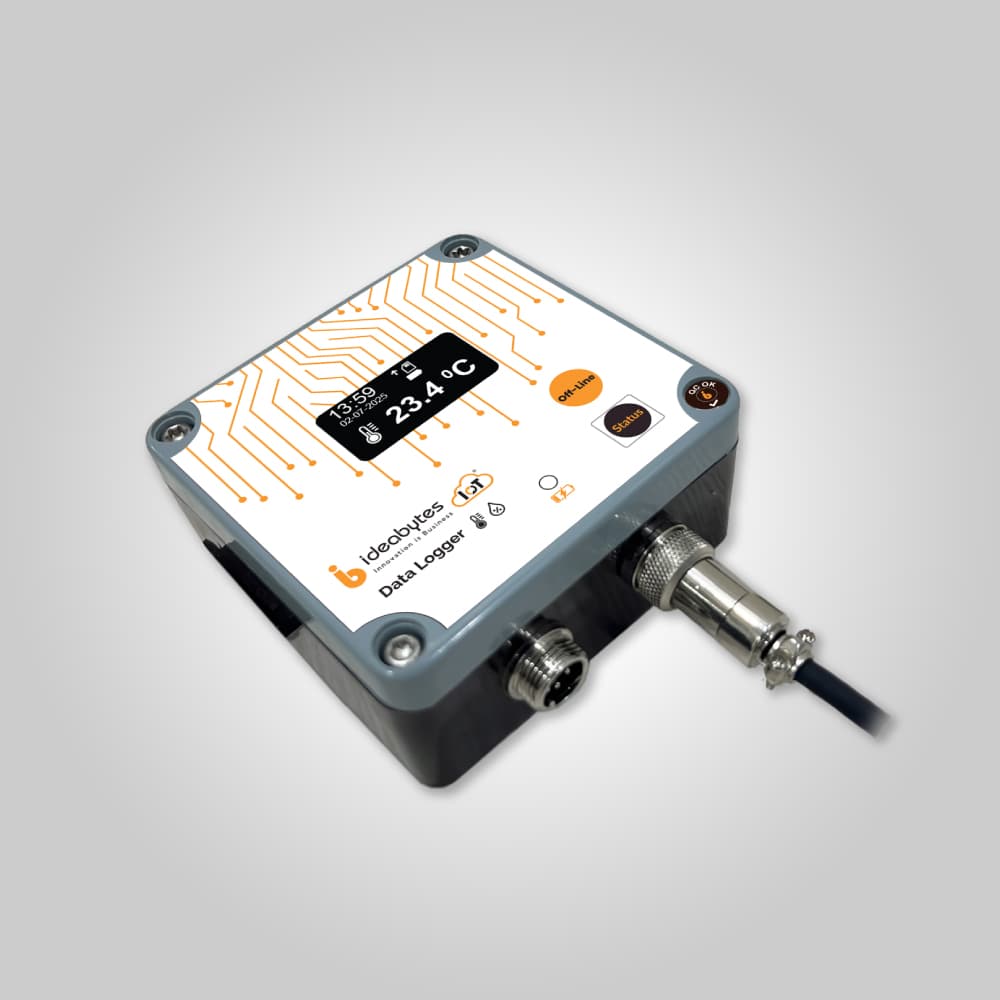
IBI-OT120 | Offline Single Channel Temperature Data Logger
Measuring Range from -50°C to +120°C
- •±0.5°C accuracy
- •Plug & Play, Wall Mountable Device
- •Data Download Options (Wi-Fi / USB)

IBI-WTH120 | Wi-Fi Temperature & Humidity Data Logger
Measuring Range from -40°C to +120°C | Humidity from 0% RH to 100% RH (Condensing)
- •Wi-Fi 802.11 b/g/n 2.4 GHz Connectivity
- •± 0.5°C (-10°C to +50°C) Accuracy

IBI-UT70 | USB Temperature Data Logger
Measuring Range from -30°C to +70°C
- •Battery life up to 90 days
- •Software for configuration
- •Replaceable battery
IBI-WT350 | Wi-Fi Temperature Data Logger
Measuring Range from -200°C to +350°C
- •Wi-Fi 802.11 b/g/n 2.4 GHz Connectivity
- •± 0.5°C (-10°C to +50°C) Accuracy
 Popular
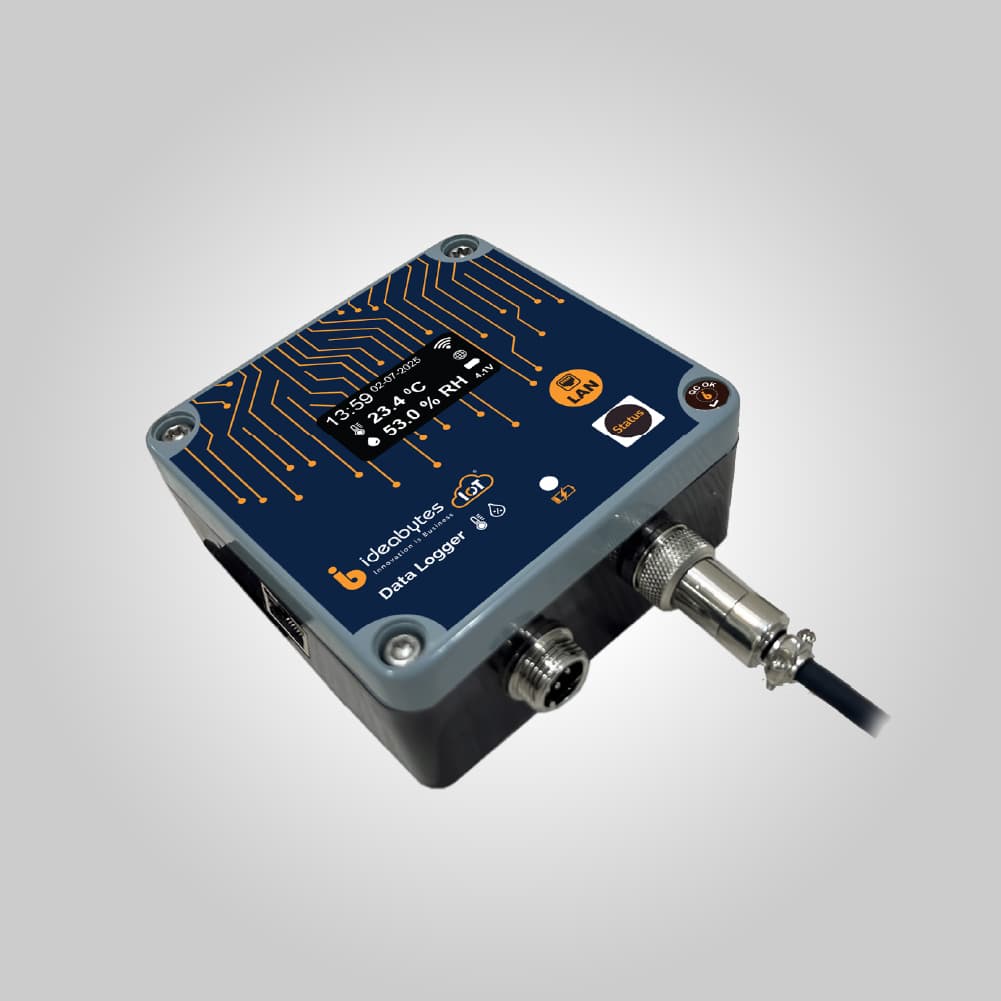
IBI-ET120 | Ethernet Temperature Data Logger
Measuring Range from -50°C to +120°C
- •LAN Ethernet RJ45 10/100 Connectivity
- •± 0.5°C (-10°C to +50°C) Accuracy
Deep freezer temperature range chart
What is deep freezer temperature? For most food and general storage it is -18 °C or colder, the figure widely cited by FSSAI guidance, HACCP plans and food codes for frozen food. The chart below lists typical set points. They are commonly cited guidance, not legal limits; the product label, your SOP and the equipment manufacturer set the final range for each unit.
- Domestic and commercial deep freezer: -18 °C to -25 °C.
- Ice cream storage and display freezers: -25 °C to -30 °C for storage, slightly warmer in scooping cabinets.
- Pharmaceutical and vaccine deep freezers: -15 °C to -25 °C for products labelled for frozen storage, following the manufacturer and WHO guidance.
- Fresh frozen plasma: -30 °C or colder in many blood-bank SOPs.
- Ultra-low temperature (ULT) laboratory freezer: around -80 °C.
- Walk-in freezer: -18 °C to -23 °C.
- Blast freezer: -35 °C to -40 °C air temperature while freezing.
Walk-in freezer temperature and alarms
The usual temperature for a walk-in freezer is -18 °C to -23 °C. Because staff walk in and out while loading, the air near the door warms quickly, while stock at the back stays cold. A single thermometer at eye level on the door does not tell you what the product experienced. Put the logger probe in the middle of the load, away from the door curtain and the evaporator coil, and add a second channel near the door if you want to see loading effects.
A walk-in freezer temperature alarm should allow for defrost cycles and short door openings, then escalate quickly if the room does not recover. Ideabytes loggers raise live alerts and app push notifications, with SMS as an option, when a channel crosses its limit, the power fails or the device goes offline.
Why freezers fail silently
A freezer rarely stops in one step. Door seals wear, ice builds on the evaporator, the condenser clogs with dust and the compressor runs longer to compensate. Temperature creeps from -20 °C to -15 °C over days, and the product quality suffers long before anything looks wrong. Power cuts add a second risk: a chest freezer may hold for several hours with the lid closed, but nobody knows exactly how long it was above its limit.
Continuous logging turns these slow failures into a visible trend. Readings are sent every 15 minutes by default, and each mains-powered Wi-Fi or 4G logger keeps working for up to 20 hours on its internal battery during a power failure, storing 90 days of data at 15-minute sampling so the record has no gaps.
Deep freezer temperature for vaccines, pharmacies and labs
Most vaccines are stored at 2–8 °C, not frozen, and freezing damages them; only a few products are labelled for frozen storage, usually between -15 °C and -25 °C. Vaccine and hospital storage has its own pages: see vaccine storage and ILR monitoring for the immunisation cold chain, and hospital and pharmacy fridge and freezer monitoring for wards and pharmacies.
Laboratories running ULT freezers at -80 °C need a probe rated well below that. The PT100-based IBI-WT350 (Wi-Fi) and IBI-MT350 (4G) read from -200 °C to +350 °C, which covers ULT freezers and liquid nitrogen dewars. The laboratory page covers incubators, stability chambers and ULT storage in more detail.
Choosing a deep freezer temperature monitoring system
The 120-series probe loggers (IBI-WT120, IBI-MT120, IBI-ET120) read -50 °C to +120 °C at ±0.5 °C between -10 °C and +50 °C, with 0.1 °C resolution, which covers every freezer up to blast freezing. Dual-channel IBI-WTD120 and IBI-MTD120 monitor a fridge and freezer pair, or two freezers, from one device with separate limits per channel.
- 4G with a built-in M2M SIM (IBI-MT120, IBI-MTD120) for shops, depots and farms without reliable Wi-Fi.
- Wi-Fi or Ethernet for supermarkets, kitchens and laboratories with a stable network.
- Offline IBI-OT120 for sites that only need a record, downloaded over Wi-Fi or USB, with up to 24 hours of battery backup.
- USB IBI-UT70 (-30 °C to +70 °C, up to 90 days at 10-minute intervals, encrypted PDF over USB) for chest freezers and audits.
- IBI-WTH120 where humidity in the anteroom or a chiller next to the freezer also matters.
Reports for FSSAI, HACCP and GDP audits
FSSAI inspectors and HACCP auditors expect a critical control point such as frozen storage to be monitored, with records and corrective actions. Pharmaceutical distributors following WHO good distribution practice need the same for frozen products. Ideabytes reports include min and max values, mean kinetic temperature, trend graphs, alarm logs and an audit trail, exported as 21 CFR Part 11 compliant PDFs on a schedule or on demand. NABL-traceable calibration certificates are available on request.
For supermarket chains, restaurant groups and frozen food distributors, the same cloud dashboard shows every freezer across every branch, with map, list and dashboard views, user roles and per-site alert contacts. Regional managers can compare units, spot a freezer that defrosts too often or runs warmer than its neighbours, and plan maintenance before a failure. Scheduled daily, weekly or monthly reports can go straight to quality and store managers, so audit evidence is ready without anyone collecting paper charts.
Compliance guides
Frequently asked questions
What is the correct deep freezer temperature?
For frozen food and general storage, a deep freezer should hold -18 °C or colder; most commercial units are set between -18 °C and -25 °C. Ice cream is usually stored at -25 °C to -30 °C, and ultra-low laboratory freezers run around -80 °C. Always follow the product label and your SOP, and check the temperature at the product, not only on the freezer display.
What temperature should a walk-in freezer be?
A walk-in freezer is usually kept between -18 °C and -23 °C. Air near the door warms during loading, so place the logger probe in the middle of the stock, away from the door and the evaporator. Set the alarm delay long enough to ride through a normal defrost cycle, so staff are alerted only when the room fails to recover.
Can one logger monitor a fridge and a freezer together?
Yes. The dual-channel IBI-WTD120 (Wi-Fi) and IBI-MTD120 (4G) take two probes, each reading -50 °C to +120 °C, with separate limits and alerts per channel. One device covers a 2–8 °C fridge and a -20 °C freezer, or two freezers side by side, saving a logger and a power point per pair.
Which logger works for a -80 °C ULT freezer?
Use a PT100 model. The IBI-WT350 (Wi-Fi) and IBI-MT350 (4G) read from -200 °C to +350 °C, which covers -80 °C ULT freezers and liquid nitrogen storage. The 120-series loggers stop at -50 °C, so they suit ordinary deep, walk-in and blast freezers but not ULT units.
Do these loggers help with FSSAI inspections in India?
Yes. FSSAI and HACCP-based food safety plans expect frozen storage to be monitored and recorded, with corrective actions. Ideabytes loggers give a continuous, time-stamped record, alarm logs and 21 CFR Part 11 compliant PDF reports, and NABL-traceable calibration certificates are available on request. Ideabytes IoT is also registered on GeM for government buyers.
How much does a deep freezer temperature monitoring system cost?
It depends on the number of freezers, single or dual channel loggers, the probe type (standard or PT100 for ULT), the connectivity (Wi-Fi, 4G, Ethernet, USB or offline) and the reporting subscription. Send us your list of freezers and sites and we will return an itemised quote.
Related reading
From the blog
Plan monitoring for your site
Tell us what you store, how many points you need to monitor and which audits you face. Our team in Hyderabad will recommend a setup and send a quotation.