Temperature monitoring
In-Transit Cold Chain Monitoring with GPS Temperature Loggers
A transport data logger records the temperature, and sometimes the humidity and location, of goods while they move between a warehouse and the customer, in a reefer truck, a reefer container or an insulated shipper. In-transit cold chain monitoring uses that record to raise alerts on the road and to prove at delivery that the load stayed in range. It is for pharma distributors, 3PL and reefer fleet operators, food and dairy companies, and exporters. Ideabytes IoT supplies live 4G loggers with GPS for owned fleets and single-trip USB and Bluetooth loggers that travel with the shipment, with 21 CFR Part 11 compliant reports.
- GeM registered
- 21 CFR Part 11 reports
- Made in India
What goes wrong without monitoring
- A reefer unit that fails on a night-time highway leg is discovered only when the doors open at the destination.
- Drivers switch the reefer off to save diesel or to avoid a noisy compressor at a halt, and the paper log does not show it.
- Indian summer ambients of 45 °C, long highway legs and hours of port or checkpost dwell push loads out of range quickly.
- Customers and regulators ask for proof of temperature at delivery, and a thermometer reading at the dock is not evidence.
- Without location data, nobody can tell where an excursion happened, so claims between shipper, carrier and consignee drag on.
- Pharma shipments under GDP need a continuous, attributable record for every consignment, not a spot check.
How the system works
- 1Decide what you need to know: live location and temperature for an owned fleet, or a sealed trip record for shipments on third-party carriers.
- 2Fit a 4G GPS logger in each reefer truck or container, with the probe in the return air or product zone, powered from the vehicle.
- 3For shipments you do not control, start a USB or Bluetooth logger when packing and place it inside the carton or pallet.
- 4Set limits per load type and send alerts to the dispatcher and driver, with location, so they can act before the load is lost.
- 5At delivery, download or share the trip report as proof of delivery, and file it with the consignment documents.
Standards and regulators
- WHO GDP
- FSSAI
- IATA PCR
- 21 CFR Part 11
Recommended loggers for in-transit cold chain
Selected from the Ideabytes range for this application. All models report to one cloud dashboard with SMS, email and call alerts.
Showing 7 products

IBI-MT70 | 4G M2M GPS Temperature Data Logger
Measuring Range from -30°C to +70°C
- •4G LTE Cat-M1 / GPS Connectivity
IBI-MT120-CN | 4G M2M Temperature + GPS Data Logger
Measuring Range Upto +120°C
- •Plug & Play Device
- •1.3" 128X64 OLED monochrome Graphical Display

IBI-MTH120-CN | 4G M2M Temperature, Humidity+ GPS Data Logger
Measuring Range Upto +120°C
- •Plug & Play Device
- •1.3" 128X64 OLED monochrome Graphical Display

IBI-UT70 | USB Temperature Data Logger
Measuring Range from -30°C to +70°C
- •Battery life up to 90 days
- •Software for configuration
- •Replaceable battery
IBI-MT350 | 4G M2M Temperature Data Logger
Measuring Range from -200°C to +350°C
- •4G LTE Cat1/2G fallback Connectivity
- •± 0.5°C (-10°C to +50°C) Accuracy

IBI-UTH70 | USB Temperature & Humidity Data Logger
Measuring Range from -30°C to +70°C | Humidity from 1% RH to 99% RH
- •Battery life up to 90 days
- •Software for configuration
- •Auto generating Encrypted PDF report through USB, no additional software required
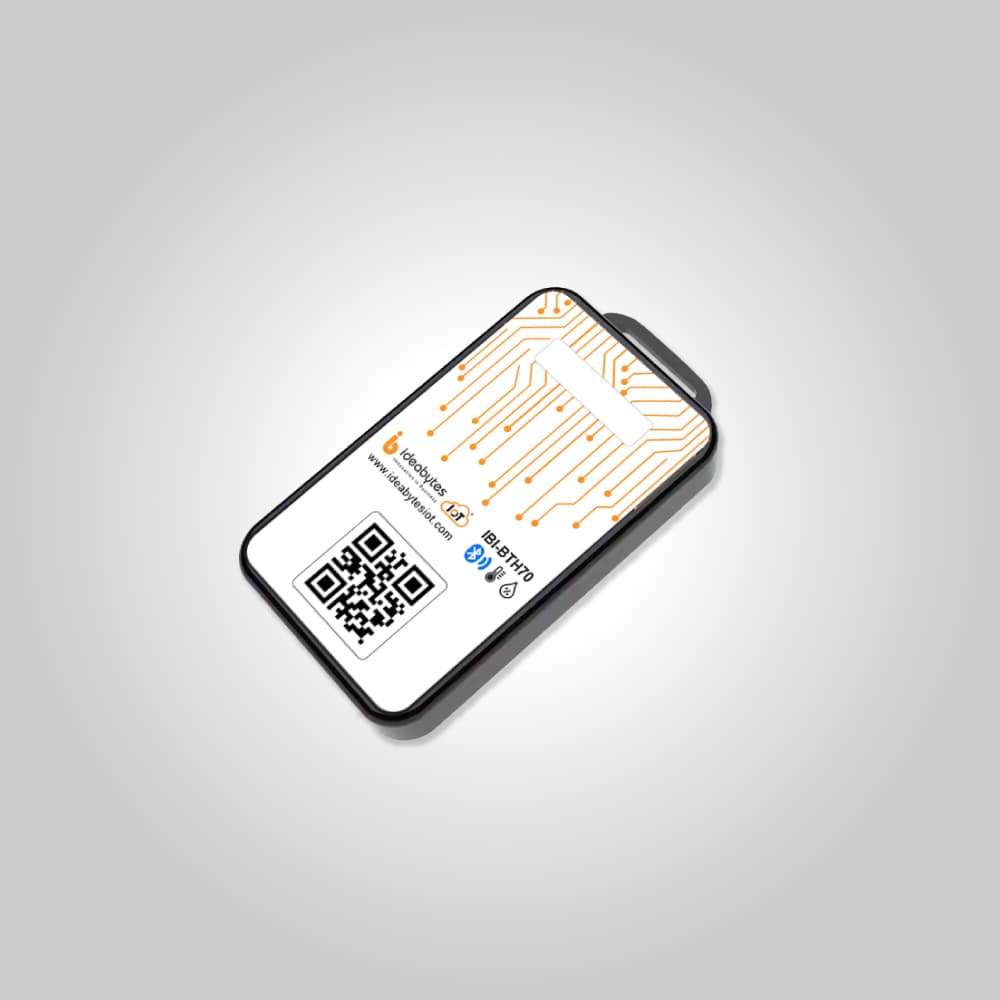
IBI-BTH70 | Bluetooth Temperature & Humidity Data Logger
Measuring Range from -20°C to +70°C | Humidity from 5% RH to 95% RH
- •Highly accurate built-in temperature & humidity sensor
- •It can store 32000 packets of temperature and humidity data
Storage, transport and incoming goods: three different monitoring jobs
Cold chain monitoring splits naturally into three stages. Storage monitoring covers warehouses and cold rooms with fixed loggers on mains power. Transport monitoring covers the goods while they move, where power, network and access all change during the trip. Incoming-goods checks happen at the receiving dock, where the question is simply whether the load arrived within limits and whether the record proves it.
This page covers the transport stage. Fixed storage is covered on our cold storage page. The two work best together: the same limits, the same alert rules and the same report format from dispatch to delivery, so an auditor can follow one consignment across all three stages.
GPS temperature logger for trucks vs a logger that travels with the shipment
If you own or contract a fleet, fit a live 4G GPS logger in each vehicle. The IBI-MT70 reads -30 °C to +70 °C through an external stainless steel probe, sends temperature and GPS location over 4G LTE Cat-M1, and runs up to 30 hours on its internal battery. The IBI-MT120-CN (temperature) and IBI-MTH120-CN (temperature and humidity) read -40 °C to +110 °C, add an OLED display for the driver, run up to 20 hours on battery, and store 90 days of readings at 15-minute sampling if the vehicle passes through a network dead zone.
If the goods travel on someone else's truck, container or aircraft, send the logger with them. The IBI-UT70 and IBI-UTH70 are flat USB loggers that record for up to 90 days at a 10-minute interval and generate an encrypted PDF report when plugged into a computer, with no extra software. The IBI-BTH70 is an IP65 Bluetooth temperature-humidity logger that stores 32,000 readings and can be read from a phone at the dock.
Reefer truck and reefer container temperature monitoring by commodity
Every load has its own set point, and the logger limits should match it. As a guide, frozen foods and ice cream travel at -18 °C or colder, chilled dairy, meat and fish at around 0–4 °C, most refrigerated medicines at 2–8 °C, and many fruits and vegetables at their own set points above freezing to avoid chilling injury. Dry-ice shipments of biologicals run near -78 °C; for those, a PT100 logger such as the IBI-MT350, reading -200 °C to +350 °C, covers the range.
Set a short alarm delay to allow for door openings at multi-drop deliveries, and a longer one for defrost cycles, so drivers are not flooded with false alarms and still act on real ones.
Pharma shipment temperature monitoring and GDP records
WHO good distribution practice and national GDP guidance expect distributors to show that medicines stayed within their labelled conditions throughout transport, using calibrated devices, with excursions investigated and documented. For air freight, the IATA Perishable Cargo Regulations include guidance on handling time and temperature sensitive healthcare products.
Ideabytes loggers provide a continuous, time-stamped record with an audit trail, alarm logs, mean kinetic temperature and 21 CFR Part 11 compliant PDF reports. NABL-traceable calibration certificates are available on request. For food loads, the same records support FSSAI requirements to keep chilled and frozen food at the right temperature during transport.
Indian road and port conditions
Indian cold chain routes are hard on equipment. Ambient temperatures above 45 °C in the north and west in summer, highway legs of 20 hours or more, waits at state borders and hours of dwell at ports and container freight stations all push reefers to their limits. A live logger lets the dispatcher see a rising trend while there is still time to call the driver, find a cold store on the route or arrange a transfer.
The 4G loggers carry a built-in M2M SIM and store readings internally, so a stretch with no coverage becomes a delayed upload rather than a gap in the record.
For export loads that sit at a port before stuffing or after de-stuffing, a logger inside the container or pallet shows exactly how long the goods spent outside the reefer plug and at what temperature. That record is often the deciding evidence when an insurer or a foreign buyer questions a rejected consignment.
Last mile cold chain monitoring and proof of delivery
The last mile, from city hub to pharmacy, hospital or restaurant, is where insulated boxes, small vans and frequent door openings cause most excursions. A trip report showing temperature and location from dispatch to delivery settles disputes quickly and gives the customer confidence to accept the load.
For last-mile runs in insulated boxes rather than reefers, a small USB or Bluetooth logger inside the box is usually the right tool: it records the actual product environment, is compact enough to send with each consignment, and the receiving pharmacist or store manager can check it on the spot. Returnable loggers can be collected on the next delivery and reused after a battery check.
- Live GPS track with temperature at every point for fleet loggers.
- Min/max, time out of range and MKT per trip.
- PDF report shared with the consignee as proof of delivery.
- Alarm log showing who was alerted and what action was taken.
Compliance guides
Frequently asked questions
What is the difference between a live GPS logger and a USB transport data logger?
A live 4G GPS logger such as the IBI-MT70 or IBI-MT120-CN stays in the vehicle, sends temperature and location to the cloud during the trip and alerts the dispatcher immediately. A USB logger such as the IBI-UT70 travels inside the shipment, records the whole trip and produces a PDF report when plugged in at the destination. Use live loggers for fleets you control and USB or Bluetooth loggers for shipments on other carriers.
Where should the probe go in a reefer truck or container?
For a single probe, place it in the return air path at the front of the cargo space, which shows what the reefer unit is delivering, or inside a representative carton for product temperature. For high-value loads, add a travelling USB or Bluetooth logger at the rear near the doors, which is usually the warmest point during multi-drop deliveries.
What happens when the truck has no mobile network?
The IBI-MT120-CN and IBI-MTH120-CN store up to 90 days of readings at 15-minute sampling and upload them when coverage returns, and the IBI-MT70 stores up to 15 days. The record stays complete; only the live view and alerts pause until the vehicle is back in coverage.
Do the reports meet GDP requirements for pharma shipments?
The loggers provide the records GDP guidance asks for: continuous, time-stamped readings, an audit trail, alarm logs with corrective action notes and 21 CFR Part 11 compliant PDF reports, backed by calibration certificates. Compliance also depends on your validated lanes, SOPs and excursion handling, which the records support.
Are calibration certificates and GeM purchase available in India?
Yes. NABL-traceable calibration certificates are available on request for each logger, which distributors and auditors usually ask for. Ideabytes IoT is registered on GeM for government buyers such as state medical services corporations, and the loggers are manufactured in India.
How much does in-transit temperature monitoring cost?
It depends on the number of vehicles or shipments, whether you need live 4G GPS tracking or single-trip USB and Bluetooth loggers, temperature only or temperature and humidity, and the reporting subscription. Share your fleet size and lanes and we will send an itemised quote.
Related reading
Applications
From the blog
Plan monitoring for your site
Tell us what you store, how many points you need to monitor and which audits you face. Our team in Hyderabad will recommend a setup and send a quotation.