Temperature monitoring
Blood Bank Temperature Monitoring System
A blood bank temperature monitoring system continuously records the temperature of blood bank refrigerators, plasma freezers, platelet incubators and walk-in cold rooms, alerts staff at once when any unit leaves its range and keeps the records that the drug licensing authority and NABH assessors review. It is used by hospital blood centres, standalone and regional blood banks, and component separation units. Ideabytes IoT supplies 4G and Wi-Fi loggers with wide-range PT100 probes for -80 °C and -40 °C freezers, dual and multi-channel units for banks of equipment, and a cloud platform with SMS and app alerts and 21 CFR Part 11 compliant reports.
- GeM registered
- 21 CFR Part 11 reports
- Made in India
What goes wrong without monitoring
- A refrigerator drifts above 6 °C overnight and whole blood units must be quarantined or discarded
- A plasma freezer fails on a Sunday and fresh frozen plasma thaws before anyone checks the chart recorder
- Chart recorders run out of paper or ink, and handwritten logs have gaps the licensing inspector will find
- Power cuts and DG changeover leave no record of how long units were out of range
- The built-in alarm sounds in an empty room at night and nobody hears it
- Monitoring probes are not calibrated or certificates are missing at the time of inspection
How the system works
- 1Fit one logger channel to each blood bank refrigerator, plasma freezer, platelet incubator and walk-in cold room
- 2Place PT100 or product-simulating probes where blood and plasma are stored, away from the door and cooling coil
- 3Connect over 4G with the built-in M2M SIM or over hospital Wi-Fi so readings reach the cloud every 15 minutes by default
- 4Set limits for each unit (2–6 °C, -30 °C or colder, 20–24 °C) with SMS and app alerts to the duty technician and medical officer
- 5Keep 21 CFR Part 11 compliant reports, alarm logs and corrective actions ready for licensing and NABH inspections
- 6Recalibrate probes on a fixed schedule and file the calibration certificates with the equipment records
Standards and regulators
- Drugs and Cosmetics Rules, 1945 (Schedule F)
- NABH
- NACO / NBTC guidelines
- FDA 21 CFR Part 11
Recommended loggers for blood bank
Selected from the Ideabytes range for this application. All models report to one cloud dashboard with SMS, email and call alerts.
Showing 7 products

IBI-MT350 | 4G M2M Temperature Data Logger
Measuring Range from -200°C to +350°C
- •4G LTE Cat1/2G fallback Connectivity
- •± 0.5°C (-10°C to +50°C) Accuracy

IBI-WT350 | Wi-Fi Temperature Data Logger
Measuring Range from -200°C to +350°C
- •Wi-Fi 802.11 b/g/n 2.4 GHz Connectivity
- •± 0.5°C (-10°C to +50°C) Accuracy

IBI-MTR4 | 4G M2M 4 Channel PT100 Temperature Data Logger (4 Temperature)
Measuring Range PT100 : -200°C to 550°C | PT1000 : -200°C to 550°C (Optional)
- •4G LTE CAT1 Technology with In-built M2M SIM Connectivity
- •0.5°C (0.05% of Full Scale) Accuracy
- •2.4" 128X64 OLED monochrome Graphical Display

IBI-WTR4 | Wi-Fi 4 Channel PT100 Temperature Data Logger (4 Temperature)
Measuring Range PT100 : -200°C to 550°C | PT1000 : -200°C to 550°C (Optional)
- •Wi-Fi 802.11 b/g/n 2.4 GHz Connectivity
- •0.5°C (0.05% of Full Scale) Accuracy
- •2.4" 128X64 OLED monochrome Graphical Display
IBI-MTD120 | 4G M2M Dual Channel Temperature Data Logger
Measuring Range from -50°C to +120°C
- •4G LTE Cat1/2G fallback Connectivity
- •± 0.5°C (-10°C to +80°C) Accuracy
IBI-WTD120 | Wi-Fi Dual Channel Temperature Data Logger
Measuring Range from -50°C to +120°C
- •Wi-Fi 802.11 b/g/n 2.4 GHz Connectivity
- •± 0.5°C (-10°C to +50°C) Accuracy
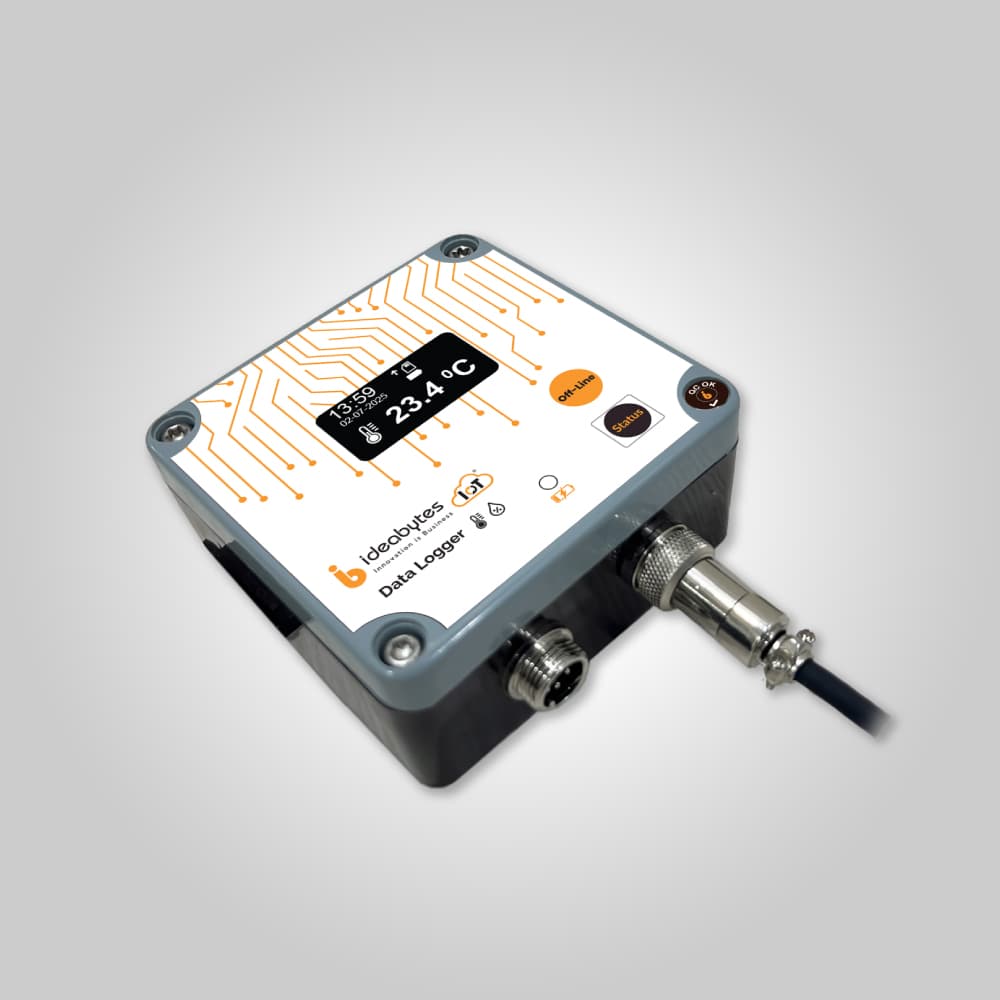
IBI-OT350 | Offline Single Channel Temperature Data Logger
Measuring Range from -200°C to +350°C
- •±0.5°C accuracy
- •Plug & Play, Wall Mountable Device
- •Data Download Options (Wi-Fi / USB)
Blood storage temperature range: what the rules require
Blood centres in India are licensed under the Drugs and Cosmetics Rules, 1945, whose Schedule F sets the storage conditions for blood and blood components. Whole blood and red cell concentrates are stored at 2 °C to 6 °C. Fresh frozen plasma and cryoprecipitate are stored at -30 °C or colder. Platelet concentrates are stored at 20 °C to 24 °C with continuous gentle agitation. The rules also expect storage equipment with temperature recording and alarms, and records that inspectors can review.
NACO and National Blood Transfusion Council guidelines and the NABH accreditation standards for blood banks build on these requirements with documented temperature monitoring, alarm response, equipment calibration and quality records. A continuous, connected monitoring system is the simplest way to meet all of them at once.
Blood bank refrigerator temperature monitoring
The 2 °C to 6 °C band is narrow, and a refrigerator full of blood bags can drift out of it within an hour of a compressor fault or a door left ajar. Place the probe where the blood is, not near the door or the evaporator, and consider a probe in a glycol or product-simulating bottle so that brief door openings do not cause nuisance alarms while a real warming trend still does. Set the alarm limits inside the regulatory range, for example 3 °C and 5 °C, so staff have time to react before units are affected.
The IBI-MTD120 and IBI-WTD120 dual-channel loggers monitor two refrigerators, or a refrigerator and a freezer, from one device with probes rated from -50 °C to +120 °C.
Plasma freezer temperature monitoring
Plasma freezers run at -30 °C to -40 °C, and some centres hold plasma or research samples at -80 °C. Ordinary probes lose accuracy or fail at these temperatures, so use a PT100 probe. The IBI-MT350 (4G) and IBI-WT350 (Wi-Fi) single-channel loggers accept a PT100 sensor with a measuring range of -200 °C to +350 °C, which covers every freezer in a blood centre with margin. The offline IBI-OT350 has the same range for back-up recording or freezer qualification studies, with data downloaded over USB or Wi-Fi.
A freezer alarm is the most time-critical alert in the building, because plasma that thaws and refreezes must be discarded. Route it to the duty technician and the medical officer at the same time, and agree in your SOP where plasma will be moved if a freezer cannot be restored quickly. A second freezer, a validated cold box or a neighbouring blood centre are the usual options, and the monitoring record will show exactly when the transfer was made.
Platelet agitator temperature and multi-unit monitoring
Platelets are the only component stored warm, at 20 °C to 24 °C in an incubator with a flatbed agitator. Both overheating and cooling below 20 °C damage platelets, and a failed incubator in a room without air conditioning can quickly exceed the upper limit in an Indian summer. Monitor the incubator with its own channel and its own limits.
Blood centres usually have several refrigerators, freezers and an incubator in one room. The 4-channel IBI-MTR4 (4G) and IBI-WTR4 (Wi-Fi) PT100 loggers cover four units from one device, each channel with its own limits and record, which lowers the cost per monitored unit. In district hospitals and smaller towns where hospital Wi-Fi is patchy, the 4G models with a built-in M2M SIM are usually the more reliable choice, and they keep the monitoring system independent of the hospital IT network.
Alerts, escalation and night cover
Built-in equipment alarms only help if someone hears them. The Ideabytes platform sends SMS and app push alerts to the people you list for each unit, typically the duty technician first, then the blood bank medical officer and the quality manager. Every alert is logged with the time it was acknowledged and the corrective action taken, which is exactly what an inspector asks about when reviewing an excursion. Connected loggers also buffer readings in internal memory with battery backup through power cuts, so the record shows exactly how long any unit was out of range.
NABH blood bank requirements and records
For licence renewal inspections and NABH assessments, keep the continuous temperature record for each storage unit, the alarm log with corrective actions, calibration certificates for every probe and your SOP for temperature excursions, including how affected units are quarantined and assessed. The platform produces 21 CFR Part 11 compliant PDF reports with an audit trail, so records cannot be altered after the fact. Calibration certificates are available with the loggers, and NABL-traceable calibration certificates are available on request.
Cost of a blood bank temperature monitoring system
The cost depends on the number of refrigerators, freezers, incubators and cold rooms, the probe types (PT100 for plasma freezers), single, dual or 4-channel loggers, 4G or Wi-Fi connectivity, the software plan and calibration. Ideabytes IoT manufactures in India and is registered on GeM, so government hospitals and blood centres can procure directly. Share your equipment list for a quotation.
Compliance guides
Frequently asked questions
What is the correct blood bank refrigerator temperature?
Whole blood and red cell concentrates are stored at 2 °C to 6 °C under the Drugs and Cosmetics Rules. Most blood centres set their monitoring alarms slightly inside that band, for example at 3 °C and 5 °C, so staff can act before any unit goes out of range.
What are the storage temperatures for plasma and platelets?
Fresh frozen plasma and cryoprecipitate are stored at -30 °C or colder. Platelet concentrates are stored at 20 °C to 24 °C in an incubator with continuous agitation. Each unit type needs its own monitoring channel with its own alarm limits, and plasma freezers need a probe rated for low temperatures such as a PT100.
Which logger should we use for a -80 °C plasma freezer?
Use a PT100 logger. The IBI-MT350 (4G) and IBI-WT350 (Wi-Fi) accept a PT100 probe with a -200 °C to +350 °C measuring range, so they cover -30 °C, -40 °C and -80 °C freezers. The 4-channel IBI-MTR4 or IBI-WTR4 can monitor several freezers from one device.
Does the system meet NABH blood bank requirements?
It provides the evidence NABH assessors and drug licensing inspectors look for: continuous records for every storage unit, alarm logs with corrective actions, 21 CFR Part 11 compliant reports with an audit trail and calibration certificates. Meeting the standard also depends on your SOPs, training and excursion handling.
How much does a blood bank temperature monitoring system cost?
It depends on the number of refrigerators, freezers, incubators and cold rooms, the probe types, single, dual or 4-channel loggers, 4G or Wi-Fi connectivity, the software plan and calibration requirements. Send us your equipment list and we will prepare a quotation.
Can government blood centres buy through GeM?
Yes. Ideabytes IoT is registered on the Government e-Marketplace, so government hospitals and blood centres can procure monitoring loggers through GeM. Calibration certificates are available with the loggers, and NABL-traceable calibration certificates are available on request.
Related reading
Applications
From the blog
Glossary
Plan monitoring for your site
Tell us what you store, how many points you need to monitor and which audits you face. Our team in Hyderabad will recommend a setup and send a quotation.